

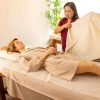
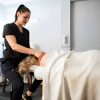

If training hard—or getting back into exercise—has you hobbling down the stairs, Vancouver RMT can help reduce DOMS (Delayed Onset Muscle Soreness) so you recover faster and move better. At Loong Wellness in East Vancouver, our registered massage therapists use assessment-driven techniques and crystal-clear pressure communication to deliver real relief—without the discomfort that can come from mixed signals during treatment.

What Is DOMS—and Why It Happens
DOMS is the deep, aching soreness that peaks 24–72 hours after an unaccustomed or intense workout. Microscopic strain in muscle and connective tissue, local inflammation, and nervous-system “protective” guarding all contribute to that stiff, tender feeling. The aim of RMT in East Vancouver for DOMS isn’t to “erase” healthy adaptation—it’s to speed recovery, reduce pain, and restore comfortable movement so you can train again sooner.
How Vancouver RMT Helps Reduce DOMS
Hands-on care supports recovery through several well-understood mechanisms:
Improved circulation & lymphatic flow: Rhythmic, graded techniques increase microcirculation, helping clear metabolites while bringing nutrients that support tissue repair.
Neuromodulation: Tolerable, consistent pressure can down-regulate threat signals that keep muscles guarded and sore.
Fascial & tissue glide: Gentle myofascial techniques reduce stiffness between layers, improving glide and cutting the “draggy” sensation in movement.
Movement confidence: When motion is less painful, you move more—active recovery compounds gains between sessions.
Techniques We Use at Loong Wellness
Our Vancouver RMT team chooses the lightest effective approach for the stage of soreness you’re in:
Effleurage & petrissage: Rhythmic, circulatory-focused work to reduce tenderness and swelling early on.
Gentle myofascial release: Slow, sustained stretch to improve tissue glide without provoking guarding.
PNF stretching (contract–relax): Helps your nervous system accept new, pain-free ranges after peak soreness subsides.
Lymphatic-inspired strokes: Support decongestion in very tender areas.
Targeted trigger-point work (later stage): Used only when tissues tolerate it comfortably.
Bottom line: Most clients report easier walking, squatting, and reaching after RMT in East Vancouver—with a quicker return to normal training.

The Pressure Conversation: Prevent Discomfort with Clear Cues
A common “con” of massage therapy is pressure miscommunication—when a therapist thinks “therapeutic,” but the client feels “too much.” At Loong Wellness, we make pressure a shared dial, not a guess.
0–10 pressure scale: 0 = no pressure; 10 = stop now. For DOMS, we typically aim for 3–5/10—comfortably therapeutic.
Frequent check-ins: We ask early and often, especially where tissues are extra tender.
You set the ceiling: If anything feels sharp, breath-holding, or bracing, say so—we adjust immediately.
Area-specific tolerance: Quads and calves may tolerate more than adductors or IT band; we titrate by region.
Result: You get the benefits of Vancouver RMT for DOMS while avoiding the needless discomfort that can happen when pressure isn’t aligned.
Your DOMS Session Map
Brief assessment: Where is soreness worst? Which movements feel limited? We’ll do a quick ROM and palpation screen.
Treatment focus: We start with circulatory work and gentle fascial techniques, then add PNF as tenderness decreases.
Communication loop: You guide pressure on our 0–10 scale; we adapt techniques live.
Re-check: We reassess a few key movements to confirm meaningful change.
Take-home plan: Two or three simple drills to hold gains and a plan for your next training day.
Post-Session: Normal Reactions & Aftercare
It’s common to feel temporary soreness, fatigue, or mild bruising for 12–48 hours after deeper work. These typically fade steadily.
Hydrate well: Fluids support tissue recovery and reduce next-day stiffness.
Gentle movement: Light walking or cycling keeps circulation up and helps lock in your new range.
Sleep: Quality sleep is the fastest free recovery tool.
Training: First session back should feel “easy-medium,” not PR-level. You’re consolidating mobility, not testing it.
When to contact your therapist: Pain that intensifies day-to-day, new swelling, or any sensation that feels “not right.” At Loong Wellness, we encourage quick follow-up so we can modify pressure, pacing, or technique.

Who Benefits Most from RMT in East Vancouver
Athletes & weekend warriors: Quads, calves, hamstrings, glutes, and shoulders after hard sessions.
New or returning exercisers: DOMS can be discouraging; early relief keeps momentum.
Desk workers training after hours: RMT addresses baseline neck/hip tension that amplifies post-workout soreness.
Active aging: Gentle RMT east Vancouver sessions help maintain confidence and comfort between activities.
RMT vs. Acupuncture at Loong Wellness
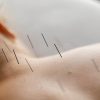
RMT in East Vancouver is ideal for mechanical restrictions—muscle tension, fascial adhesions, limited tissue glide. Acupuncture can complement RMT by modulating pain, calming over-active guarding, and improving local circulation. We combine therapies when it accelerates results without over-treating.
Example phased approach:
Weeks 1–2: Vancouver RMT 1×/week + gentle mobility; acupuncture as needed for pain modulation.
Weeks 3–4: RMT every 1–2 weeks; reinforce gains with breath-led mobility and light strength.
Maintenance: RMT every 3–4 weeks or around training cycles to prevent re-tightening.
At-Home Actions Between Sessions
Micro-mobility:
Hips: 5–8 hip CARs daily, pain-free ranges only.
Shoulders: 2–3 slow shoulder CARs each desk hour.
T-spine: 1–2 minutes of open-book rotations or foam-roller extensions.
Breathing reset: 3–5 minutes of diaphragmatic breathing (4-sec inhale, 6-sec exhale) to reduce global muscle tone.
Load smart: Progress weights gradually; if soreness spikes, dial back volume before intensity.
Results Timeline & Realistic Expectations
Session 1: Often a noticeable ease in movement and less “pinch” at end-range.
Sessions 2–3: Better tissue glide, fewer morning “kinks,” and improved warm-ups.
Sessions 4–6: More durable ROM gains, faster recovery rhythm, and less post-workout tightness.
Your history, stress, sleep, and training load all influence pace. We set checkpoints and adjust together.
Quick FAQs
How many sessions to reduce DOMS?
Many feel change in 1–3 sessions. Sustained improvements usually take 3–6 sessions plus simple mobility and sensible training.
Is bruising after RMT dangerous?
Mild, superficial bruising can occur after deeper techniques and typically resolves in a few days. If bruising worsens, or you’re on blood thinners, update your 注册按摩师.
Can I train after my session?
Yes—choose light movement. Avoid max-effort lifting or long static stretching for 24 hours after deep work.
Will RMT help if I sit all day?
Absolutely. We target neck/shoulder/hip tightness and teach micro-mobility to keep gains between sessions.
Ready to move better with Vancouver RMT and bounce back from DOMS faster? Book your session at Loong Wellness in East Vancouver. Call (604) 620-6560 or book online—same-day appointments often available.
Compliance & care note: This article offers general education and is not a substitute for personalized medical advice. If you have a medical condition, recent injury/surgery, or are pregnant, consult your healthcare provider and inform your therapist before treatment.

 Chinese
 English