- 560 Kingsway Vancouver
- (604) 620 - 6560
- booking@loongwellness.ca

<div class="widget ">
<div class="info-media1">
<div class="media-icon"><i class="fal fa-map-marker-alt"></i></div>
<span class="media-label">560 Kingsway
Vancouver, BC</span>
</div>
<div class="info-media1">
<div class="media-icon"><i class="far fa-phone-alt "></i></div>
<span class="media-label"><a href="tel:+16046206560" class="text-inherit">(604) 620 - 6560</a></span>
</div>
<div class="info-media1">
<div class="media-icon"><i class="fal fa-envelope"></i></div>
<span class="media-label"><a class="text-inherit" href="mailto:booking@loongwellness.ca">booking@loongwellness.ca</a></span>
</div>
</div>A Chinese medicine appointment here starts with an assessment, not a treatment menu. You are told which of acupuncture, cupping or Tui Na leads your session, why that one, and how many visits it should take before you judge whether it is working. ICBC and most BC extended health plans are billed directly.

TCM — sometimes written as Chinese traditional medicine, or just Chinese medicine — is a way of assessing, plus a set of treatments. The assessment looks at how your symptoms behave over time — what triggers them, when in the day or month they worsen, how sleep and digestion move with them. That assessment decides what you get: acupuncture, cupping, Tui Na (TCM massage), facial work, classical herbal formulas where they fit, or guidance on food and routine between visits. The needles are not the method. The reasoning is.
It is not a second opinion on your medical care. A Chinese medicine pattern is not a diagnosis, and we will not ask you to stop anything your physician has prescribed. If something in your history needs investigating, we say so and you go get it looked at.
Traditional Chinese Medicine describes patterns of symptoms. Those descriptions are not statements about your biochemistry. Most of the distrust people bring to a first appointment comes from clinics blurring that line — so here is the line, drawn.
A test you can apply to any Chinese medicine clinic in this city. If a website tells you that cupping draws out toxins, that a treatment flushes lactic acid, or that needles balance your hormones, ask what the evidence is. We do not make those claims, and the reason is simple: we cannot support them.
"Our team of experienced practitioners" tells you nothing. Search for a Chinese medicine practitioner in Vancouver and nearly every result says that same sentence. Within Chinese medicine there are distinct traditions that produce genuinely different treatment plans for the same complaint, so it is worth knowing which one you are walking into.
Jing Fang means classical formulas: a lineage that works from a small, well-documented set of prescriptions matched tightly to a pattern, rather than assembling a new formula from scratch each visit. In practice it means the reasoning is written down and repeatable, and you can be told at the outset what should change and by when.
The focus is recurring pain patterns — sciatica, migraine, sports injuries — and the internal complaints that do not resolve on their own: sleep, digestion and fatigue.
Chinese medicine is a regulated profession in British Columbia. CCHPBC registers four distinct titles, and each carries a different scope:
Anyone treating you in BC should appear on the public CCHPBC register under one of them. Ask which designation your practitioner holds, then verify it yourself. A clinic that gets defensive about that question has told you something useful.
All three are available at 560 Kingsway and all three get called "Chinese medicine" by somebody. They are not interchangeable, and the wrong booking usually wastes a session and a chunk of your insurance limit.
| TCM assessment & acupuncture | Cupping & Tui Na (TCM massage) | Registered massage (RMT) | |
|---|---|---|---|
| Start here if | Symptoms keep cycling — sleep, digestion, headaches, stress load, or pain that keeps coming back | You already know where the tension is and want hands-on work along the same reasoning | You want a movement assessment, clinical notes and a receipt for a specific injury or claim |
| What happens | History, tongue and pulse, then a needling plan built around your pattern | Suction, or thumb-and-forearm technique worked along the affected region | Assessment, treatment, re-test and written homecare |
| Delivered by | Registered acupuncturist | Registered practitioner, depending on the technique booked | Registered massage therapist |
| Insurance receipt | Yes — registered acupuncture | Depends which service is booked — ask at reception | Yes — RMT |
| ICBC direct billing | Yes, for collision-related care | Only as part of a covered treatment | Yes, direct billing |
| Read more | Acupuncture in Vancouver | Cupping therapy | Registered massage therapy |
Still unsure? Call and describe the symptom and how long it has been going on. If Chinese medicine is not the right starting point, we will tell you what is.
People arrive expecting to be told something mystical about themselves. What actually happens is closer to a structured interview. These are the six things you will be asked, so you can think about them on the way in.
One problem, described the way you would describe it to a friend. Six weeks and six years get treated differently, so the timeline matters more than the wording.
Time of day, point in the month, after meals, in wet weather, during deadline weeks. Timing is what separates one pattern from another that looks identical on paper.
Getting to sleep, staying asleep and waking at a fixed hour are three different problems. "Bad sleep" is not enough to work with.
When bloating shows up relative to eating, whether appetite drops in stressful weeks, thirst, and regularity. Asked even when you came in about your shoulder.
Hours, shift pattern, screen time, caregiving, training load. Not small talk — it is usually the variable that explains why symptoms cluster.
Bring the list or a photo of the labels. This is a safety step: it changes needle technique, rules some things out, and it is essential before any herbal formula is considered.
Almost nobody arrives having decided they want Chinese medicine. They arrive because something has been cycling for months and the obvious fixes stopped working.
Falling asleep fine and then waking at the same hour, or lying down exhausted with the brain still running. Treatment is aimed at the arousal pattern rather than at sedation, and the first thing measured is whether the wake-up time shifts — not whether you felt relaxed in the room.
Symptoms that flare in stressful weeks and settle on holiday are treated as a pattern, not as a stomach problem in isolation. Anything with weight loss, blood or persistent change goes to a physician first.
Tension-type headaches that arrive in runs rather than randomly, often with jaw clenching and neck tightness. Usually treated alongside hands-on work rather than instead of it.
Neck, shoulder and low-back tightness that responds to massage and returns within the week. The question we ask is what keeps re-loading it, which often changes the plan.
Short fuse, tight chest, shallow breathing, no off switch at the end of the day. Sessions are quieter and longer between needles, and most people notice the change in the evening rather than in the room.
Acupuncture is generally covered following a collision and we bill ICBC directly, so you do not pay the full amount and claim it back.
These are not a menu to choose from before you arrive. The assessment picks, and it usually picks one to lead and one to support.
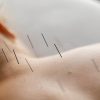
Fine sterile single-use needles placed according to your pattern, left in for a rest period, adjusted partway. This is what most people mean when they search for Chinese acupuncture in Vancouver. Chinese acupuncture has the widest body of research behind it of anything on this page, and it is the treatment ICBC and most extended health plans recognise by name.
Suction cups held or moved over an area to change how the tissue tolerates pressure. Marks last a few days and are not bruises in the injury sense. Booked most often for upper backs and shoulders that have stopped responding to direct pressure.
Structural, firm bodywork worked along the region rather than a relaxation flow. It suits people who want manual treatment but are coming in through the Chinese medicine side. Tui Na is a different service from registered massage therapy — check which receipt you need before booking.
Fine needles used on the face and neck, usually booked for jaw tension, morning puffiness and skin tone. Results are gradual and vary between people. We do not describe it as a facelift and we do not make claims about collagen.
You are not supposed to know. Describe the symptom and how long it has been going on, and we will tell you which appointment to book — including when the answer is that Chinese medicine is not the right starting point for it.
Every clinic in this category is under the same advertising rules. Most write around them. We would rather put the boundary on the page, because it is the part you cannot verify from a review.
On Chinese herbal medicine. Classical formulas are part of the Jing Fang tradition practised here, and they carry real interaction risks with prescription medication and supplements. Herbs are discussed when they fit your pattern and your medication list — never handed out as a default add-on, and never before that list has been reviewed. Background reading: how herbal medicine fits into a TCM plan.
Rates depend on session length, service and practitioner. They live in one place on this site so a service page can never quote you something out of date.
The MSP detail almost nobody is told. Those 10 visits are shared across acupuncture, massage therapy, chiropractic, naturopathy, physiotherapy and non-surgical podiatry, at any clinic in British Columbia — not 10 each. If you have already used some on massage this year, they are gone from the same pool. MSP coverage also depends on the individual practitioner being enrolled with MSP, so confirm with reception before your appointment rather than after.
We are at 560 Kingsway, Vancouver, British Columbia. Clients travel in from Main Street, Fraser, Commercial Drive, Riley Park, Cedar Cottage and the Mount Pleasant edge — a short trip from most of East Van, and considerably easier to park near than Main Street. If you have been searching for a TCM clinic near you in Vancouver, this is the practical detail that usually decides it: parking, evening hours, and whether you can be seen this week.
Kingsway runs diagonally across the east side, which is why this address is reachable from more of Vancouver than its postcode suggests — and why parking is easier here than anywhere on Main Street.
| Monday – Thursday | 10:00 – 20:00 |
| Friday | 10:00 – 19:00 |
| Saturday – Sunday | 10:00 – 18:00 |
These are for the clinic as a whole. Most people who come here for Chinese medicine end up booking more than one of the services on this page, so the reviews cross over.
Best massage I've ever had. King is an absolute king, and Yi is amazing. Their massages are targeted and intentional — I always leave feeling like a new person.— Lesley Stokes, Google
I typically get massages at least ten times a year, and I can confidently say that Tony is one of the best RMTs I've ever had. Highly recommend!— Jay Jeong, Local Guide
Lovely clinic. I've recently started going here and love that you can get in quite quickly. My sessions with Harrison have been absolutely excellent, with ample care and skill.— Sheena R, Google
Get medical assessment first if you have chest pain, fainting, new or worsening neurological symptoms, unexplained weight loss, night sweats, a fever, or pain that woke you from sleep and has not let up. None of these are Chinese medicine's job and we will send you on.
Tell us at booking if you take blood thinners or have a bleeding disorder, have a pacemaker or other implanted device, are pregnant or trying to conceive, have had lymph nodes removed, have a skin condition over the area, or are receiving cancer treatment. None of these automatically rules out care — they change technique, point selection, and whether herbs are considered at all.
TCM care supports comfort and function. It is not a diagnosis, and it is not a substitute for investigation, imaging or prescribed treatment.
It is a diagnostic framework plus a set of treatments. The framework looks at how symptoms behave over time — what triggers them, when they worsen, and how sleep, digestion and energy move alongside them. What comes out of that is a decision about which treatment leads: acupuncture, cupping, Tui Na, facial work, classical herbal formulas, or changes to food and routine between sessions. The distinguishing feature is not the needles. It is that the same complaint in two people can produce two different treatment plans.
Dr. Liangjie Ye practises here in the Jing Fang (classical formula) tradition. On titles: "Doctor of TCM" is a specific protected designation in British Columbia, and CCHPBC registers four of them — Registered Acupuncturist (R.Ac), Registered TCM Herbalist (R.TCM.H), Registered TCM Practitioner (R.TCM.P) and Doctor of TCM (Dr.TCM). Each carries a different scope. Anyone treating you in BC should be listed on the public CCHPBC register under one of them, so ask which designation your practitioner holds and verify it yourself. Any clinic that gets defensive about that question has told you something useful.
Acupuncture is one treatment. Traditional Chinese Medicine is the reasoning that decides whether acupuncture is the right treatment, where to needle, and what else should run alongside it. You can book acupuncture on its own — many people do, particularly for a known recurring problem — but a first visit is usually a full assessment because that is what makes the session specific to you. If you already know you want needling for a familiar issue, see acupuncture in Vancouver.
Partly, and only for some people. If you hold MSP supplementary benefits status, MSP contributes $23 per visit toward a combined maximum of 10 visits per calendar year, shared across acupuncture, massage therapy, chiropractic, naturopathy, physiotherapy and non-surgical podiatry at any clinic in British Columbia. That is the whole pool, not 10 visits each. Coverage also requires the individual practitioner to be enrolled with MSP, so confirm with reception before booking. For most people, extended health or an ICBC claim covers far more than MSP does — see how direct billing works.
Sleep is one of the most common reasons people book TCM in Vancouver. The assessment separates three problems that all get called insomnia: trouble falling asleep, trouble staying asleep, and waking at a consistent hour. They are treated differently. Treatment is aimed at the arousal pattern rather than at sedating you, it will not interact with medication you are already taking, and the first thing we track is whether your wake-up time moves — not whether you feel relaxed in the room. If nothing has shifted by the fourth or fifth session, we say so. Further reading: when melatonin stops working.
Classical formulas are part of the Jing Fang tradition practised here, so herbs are on the table when they fit your pattern. They are not a default add-on. Herbal medicine interacts with prescription drugs and supplements in ways that matter, so the conversation only happens after your medication list has been reviewed, and sometimes the answer is that herbs are not appropriate for you. Bring the list or a photo of the labels to your first appointment.
TCM massage usually means Tui Na — firm, structural bodywork worked along a region rather than a relaxation flow. It is not the same service as registered massage therapy, it is delivered under a different registration, and the receipt is different. If you need a receipt for an extended health claim or an ICBC file, check which one your plan accepts before you book. See registered massage therapy for the comparison.
Insertion is usually not painful — the needles are much finer than the ones used for injections. What most people feel afterwards is a heavy, dull or spreading sensation around the point, called De Qi. That is expected, and it is worth saying out loud when it happens so the practitioner can adjust depth. Sharp or electric pain is not expected. Tell your practitioner immediately and that needle gets moved.
Judge it at four to six sessions, not at ten. By then something measurable should have moved — the wake-up time, the number of flare-up days in a month, how long the effect lasts between visits. If nothing has, the plan is wrong and the honest response is to change it or to tell you this is not the right approach for you. Frequency is set after the assessment. We do not sell courses of treatment before we have seen you.
Yes, and it is common. Acupuncture, cupping, Tui Na and registered massage all happen in the same rooms here, so you can combine treatments in one visit instead of coming twice. The order matters more than people expect — which comes first depends on what you are treating. Say what you are booking for and reception will sequence it.
Yes. Describing pain, numbness or sleep problems in a second language is genuinely difficult, and a Chinese medicine assessment depends on that detail. Say which language you would prefer when you book, and bring parents or family members who are more comfortable in Chinese. More on this: Chinese-speaking practitioners on Kingsway.
Describe the symptom, when it gets worse, and whether you have extended health, MSP supplementary benefits or an ICBC claim. We will tell you which appointment to book — and if Traditional Chinese Medicine is not the right starting point for what you are describing, we will say that instead.
🎉 Relax on Us! Enjoy First Time Visit on Non-registered massage 🎉 $35 ONLY