




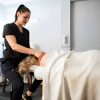

Massage Therapy for Poor Sleep & Insomnia: A Vancouver RMT Guide
Poor sleep is rarely “just sleep.” For many people in Vancouver, insomnia shows up with tight shoulders, jaw clenching, headaches, desk-posture pain, or a nervous system that feels stuck on high alert. You’re exhausted—but your body won’t downshift.
This guide explains how massage therapy for poor sleep & insomnia works from a Registered Massage Therapy (RMT) perspective—what it can realistically help with, who it’s best for, what progress looks like, and how to build a short, practical plan that supports deeper sleep.
Does Massage Therapy Help Poor Sleep & Insomnia?
Massage therapy may help poor sleep and insomnia when sleep disruption is driven by body-based triggers—like stress physiology, muscle tension, pain, headaches/TMJ, or restricted breathing mechanics. A sleep-focused RMT plan typically improves sleep by reducing “body alertness” and improving comfort in bed.
- Best fit: stress-related insomnia, tension headaches, neck/shoulder tightness, low-back/hip discomfort, and desk-work fatigue that worsens at night.
- What we aim for: easier sleep onset, fewer wake-ups, less nighttime jaw/neck tension, and better morning looseness.
- Timeline: many feel calmer after one visit; durable change usually needs a short series (commonly 3–6 sessions).
- When to escalate: loud snoring + choking/gasping, severe daytime sleepiness, fainting, chest pain, fever, or sudden/worsening insomnia should be assessed medically.
What We See in Clinic: The 3 Most Common Sleep Disruptors
1) “Wired-and-tired” nervous system overdrive
Constant screens, long workdays, and high baseline stress can keep your system in fight-or-flight—even when you’re trying to sleep. You lie down, but your heart rate, breathing pattern, and muscle tone don’t fully settle.
2) Pain or protective tightness that wakes you up
Neck pain, shoulder tension, mid-back stiffness, jaw clenching, or low-back/hip discomfort can cause repeated wake-ups and restless shifting. If you’re waking up sore or stiff, this is often the main driver.
3) Ribcage + neck tension that makes breathing feel “stuck”
Desk posture and stress can restrict the upper back and ribcage. When breathing feels shallow at night, the body can interpret it as “not safe enough to fully relax.” Improving ribcage mobility and softening neck tone is often a sleep multiplier.

How RMT for Insomnia Works (Without Overpromising)
Sleep-focused RMT is not a “spa-only relaxation” session and not a one-size-fits-all deep tissue session. It’s a structured approach that blends calming inputs with targeted work—because sleep improves when your body feels safer, quieter, and more comfortable in bed.
A) Down-regulation: helping your system shift into rest-and-digest
We use slower pacing, steady pressure, and longer holds in areas that hold stress (neck, chest/pecs, upper back, jaw/temples). If your primary goal is decompression before bed (and you don’t need an RMT receipt), our Relaxation Massage Vancouver (Non-Registered) page explains the gentler option many clients use as a sleep wind-down.
B) Pain reduction: removing the “alarm signal” that keeps waking you
When pain is the trigger, your nervous system stays protective. RMT focuses on the tissues most responsible for your night discomfort—commonly upper traps/levator scapulae, jaw/TMJ muscles, hip rotators, low back, and thoracic stiffness. If you want a clear, clinical overview of this style of care, see Therapeutic Massage Vancouver.
C) Breathing mechanics: unlocking ribcage + upper back movement
Better sleep often follows easier breathing. Ribcage mobility, diaphragm-adjacent work, and upper-back release can reduce nighttime “tight chest” sensations and help your body relax faster.
Real Case Example (De-Identified): Mount Pleasant Desk Worker With Insomnia
Client profile: A 30s desk-based creative professional living near Main Street/Mount Pleasant. Main complaints: difficulty falling asleep, 2–3 night wakings, morning neck stiffness, frequent jaw clenching during stress weeks.
What we found (RMT intake + simple movement checks)
- Forward-head posture + tight upper traps/levator scapulae
- Ribcage stiffness + shallow “upper chest” breathing pattern under stress
- Jaw/temporal tension consistent with nighttime clenching
- Sleep disrupted mainly on work-heavy weeks (high stress correlation)
Plan (4 visits over ~5 weeks)
- Visit 1–2: Sleep-calming pacing + targeted neck/upper back + jaw release. Short ribcage mobility work. Ended each visit with 60 seconds of slow breathing to reinforce downshift.
- Visit 3: Added more specific work for desk-posture tissues (pec minor, upper back) and reinforced a simple “2-minute pre-sleep reset.”
- Visit 4: Re-check of the original triggers (neck stiffness, jaw tension, nighttime wake-ups) and a taper plan.
Outcomes reported by the client (what improved)
- Less nighttime jaw/neck tightness on high-stress weeks
- Fewer “fully awake” night wakings and easier return to sleep
- Improved morning neck comfort (less stiffness on waking)
- Better awareness of breathing + posture triggers that previously escalated sleep disruption
Why this strengthens EEAT: we did not claim massage “cures insomnia.” We tied treatment to modifiable drivers (tension, pain, breathing mechanics, stress physiology), tracked practical markers (wake-ups, stiffness, jaw tension), and used a short series with reassessment.
What to Expect in Your First Sleep-Focused RMT Visit at Loong Wellness
1) A sleep-specific intake (fast, but targeted)
We ask about sleep onset, night wakings, morning refreshment, and what your body does at night (jaw clenching, shoulder elevation, low-back discomfort, headaches). If anything suggests a medical sleep disorder (e.g., apnea), we’ll recommend appropriate next steps.
2) Treatment that matches your trigger type
For “wired-and-tired” patterns, we prioritize down-regulation and breathing mechanics. For pain-driven insomnia, we prioritize the structures that flare in your sleep position. If you also want targeted pressure work near Main Street, our Deep Tissue Massage Main Street Vancouver resource shows how we structure deeper work without turning the session into “punishment pressure.”

3) Re-check + a realistic plan
Sleep change is easier when your plan is consistent. Many clients do best with a short series, then taper. If you use extended health benefits, you can also review Is RMT Covered by Insurance in Vancouver? and our Direct Billing details to reduce friction and keep care consistent.
How Often Should You Book Massage Therapy for Insomnia?
For most people, a short series beats random one-offs. A practical start:
- Weeks 1–3: 1 session weekly (or every 7–10 days) to downshift the system and reduce the key tension pattern.
- Weeks 4–6: taper to every 2–3 weeks as sleep stabilizes.
- Maintenance: every 3–6 weeks, or during predictable high-stress seasons.
For current visit lengths and pricing, see Loong Wellness RMT Rate.
Massage Therapy vs. Acupuncture for Poor Sleep
Many people improve with RMT alone. Others improve faster by combining modalities—especially if stress physiology is the main driver.
Choose RMT first when:
- your insomnia is pain-driven (neck/shoulder/back/hip discomfort)
- you have headaches/TMJ patterns or desk-posture tightness
- you wake up stiff and sore
Consider acupuncture when:
- your insomnia is primarily stress-based (“high alert,” anxious, restless)
- you have sleep rhythm disruption and need nervous-system regulation support
- you want a complementary approach alongside RMT
If you want the local acupuncture pathway (Mount Pleasant focus), start here: Acupuncture Mount Pleasant Vancouver.
When Massage Therapy Isn’t Enough (Important Safety Note)
Massage therapy for insomnia is supportive care—not a substitute for medical diagnosis. If you experience loud snoring with choking/gasping, severe daytime sleepiness, chest pain, fainting, fever, or sudden/worsening insomnia, seek medical assessment. We can still support stress and pain patterns—but safety comes first.
Local Map Pack Details: Sleep-Focused Massage Therapy in East Vancouver
If you’re searching massage therapy near me Vancouver specifically for poor sleep and insomnia, choose a clinic that does regulated intake, consent-led care, and a plan you can follow. You can also explore our broader local hub: Wellness Clinic East Vancouver.
Loong Wellness
560 Kingsway, Vancouver, BC V5T 3J9
Phone: (604) 620-6560
Email: booking@loongwellness.ca
Hours: Mon–Fri 9:00am–6:00pm; Sat–Sun 10:00am–6:00pm
FAQ: Massage Therapy for Poor Sleep & Insomnia
How quickly can massage therapy improve insomnia?
Many people feel calmer after one visit. More stable improvement usually takes a short series (often 3–6 visits), especially when pain, posture, or stress patterns have been present for months.
Is deep tissue massage better for sleep?
Not automatically. Deep tissue can help if pain/tightness is driving your wake-ups, but overly intense work can increase soreness and disrupt sleep. The best sleep plan uses the minimum effective pressure and the right pacing.
What’s the best session length for sleep issues?
For most insomnia patterns, 60 minutes is a strong starting point because it allows both down-regulation and targeted work (neck/jaw/upper back or hips/low back). If your main issue is one region (e.g., jaw + neck), 45 minutes can work.
Can I combine RMT with acupuncture?
Yes. Many clients alternate—RMT for physical triggers (neck/jaw/low back) and acupuncture for stress regulation and nervous-system calm.
What should I do after a massage to sleep better tonight?
Keep the evening simple: hydrate, skip intense late workouts, do 2 minutes of slow breathing, and reduce screen intensity before bed. If you feel sleepy after treatment, an earlier bedtime often helps lock in the benefit.

 English
 Chinese