- 560 Kingsway Vancouver
- (604) 620 - 6560
- booking@loongwellness.ca


<div class="widget ">
<div class="info-media1">
<div class="media-icon"><i class="fal fa-map-marker-alt"></i></div>
<span class="media-label">560 Kingsway
Vancouver, BC</span>
</div>
<div class="info-media1">
<div class="media-icon"><i class="far fa-phone-alt "></i></div>
<span class="media-label"><a href="tel:+16046206560" class="text-inherit">(604) 620 - 6560</a></span>
</div>
<div class="info-media1">
<div class="media-icon"><i class="fal fa-envelope"></i></div>
<span class="media-label"><a class="text-inherit" href="mailto:booking@loongwellness.ca">booking@loongwellness.ca</a></span>
</div>
</div>Slow, sustained pressure into the layers under the surface, for tension that a lighter massage keeps skating over. Delivered by registered massage therapists on Kingsway, with an insurance-eligible receipt and direct billing.

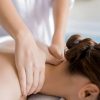
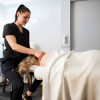
Deep tissue massage works into the deeper layers of muscle and the fascia around it, using slow strokes and sustained pressure rather than the flowing, surface-level technique of a relaxation massage. Your therapist stays on one area longer, works along the direction of the fibres, and waits for tissue to soften rather than forcing through it.
"Deep" describes where the work happens, not how hard it hurts. A skilled deep tissue massage should feel intense and specific — a sensation you can breathe through — never something you have to brace against. If you are gripping the table, the pressure is wrong, and telling us changes it immediately.
The single biggest reason people leave a deep tissue massage disappointed is that nobody agreed on pressure. So we do — out loud, at the start, and again whenever we change area.
Sharp, burning or electrical sensations are never part of the working range. Say so the moment you feel one — the therapist changes approach, not the client's tolerance.
These four names get used loosely across Vancouver, and booking the wrong one is the most common way people waste a session. Here is how they differ at our clinic.
| Deep tissue | Therapeutic / RMT | Relaxation | |
|---|---|---|---|
| Main goal | Release stubborn tension in deeper muscle and fascia | Assess and treat a specific problem, with a plan | Wind down, reduce general tension |
| Pressure | Firm and sustained, 5–7 on the scale | Whatever the assessment calls for — sometimes gentle | Light to medium throughout |
| Pace | Slow, staying on one area | Varies; often includes testing and re-testing movement | Flowing, full body |
| Insurance receipt | Yes — RMT | Yes — RMT | Only if booked as RMT |
| Best when | You know where it hurts and lighter work hasn't touched it | You are not sure what is wrong, or you have an ICBC claim | You want to switch off, not be worked on |
If your session should be built around training or an event date, book sports massage instead. If firm pressure has always felt like too much, a much gentler alternative may suit you better. Still unsure? Compare all of our registered massage therapy options.
Hours at a screen shorten the front of the chest and overload the mid-back. Deep tissue work through the rhomboids, levator scapulae and upper traps is the most requested session at our clinic.
Slow work through the paraspinals, QL and glutes, rather than only where you point. The tissue that is complaining is not always the tissue that is driving it.
Tight lats and pecs limit the shoulder long before the joint itself is the problem. We treat, then re-check the movement so you can feel the change.
Forearms, grip, hips, calves — the pattern depends on the trade. Evening appointments Monday to Thursday exist for exactly this.
Deep tissue is often part of a longer plan rather than the first treatment. See ICBC RMT treatment for how claims and direct billing work.
Lifting, running, cycling and court sports all leave their own signature. If the session should be timed to an event, book sports massage instead.

There is no single deep tissue routine. What your therapist reaches for depends on how your tissue responds in the first few minutes, and it changes within the session.
If you want the detail behind each of these, we have written a longer guide to deep tissue massage techniques. Instrument-assisted work (IASTM) is also available where a tool gives more control than hands.
Every treatment takes place in a fully enclosed private room, not a curtained bay.
Where it hurts, how long it has been there, what makes it worse, and any health history or medication we need to know about. Then we agree on a number from the 0–10 scale before anything starts.
A short set of movements — overhead reach, rotation, a hinge — so the session targets what is actually restricted rather than only the loudest spot.
Sustained pressure into the areas that came up, with the therapist checking in as they move between regions. You stay draped throughout and you control what is uncovered.
We repeat the movement check so you can feel the difference before you leave, then give you two or three specific things to do before the next session. Written down, not recited at the door.
Possibly, and that is normal. Mild soreness for 24 to 48 hours after deeper work feels similar to the day after a hard workout. Some redness over the area is also normal and settles within an hour or two.
What is not normal: sharp pain, bruising, numbness, tingling, or soreness that is worse on day three than day one. If any of that happens, call us — it means the pressure was wrong for you, and we will adjust next time or suggest a different treatment altogether.
We do not tell clients that deep tissue massage flushes toxins or lactic acid out of the body. That is a persistent myth, and it is not why the treatment helps.

Describe what you're feeling and how firm you like to be worked on. Two minutes on the phone is cheaper than booking the wrong hour.
Deep tissue is billed at our standard registered massage therapy rate — there is no surcharge for pressure.
We direct bill:
Tell us before you book, or speak to a physician first, if you have: an acute injury from the last 48 hours with swelling or bruising; a suspected fracture; a known or suspected blood clot; an active infection or fever; a skin condition or open wound over the area; osteoporosis or fragile bones; or you are pregnant. If you take blood thinners or manage a cardiovascular condition, mention it at intake so pressure is adjusted.
Massage therapy supports comfort and mobility. It is not a substitute for diagnosis, imaging or medical care. If pain is severe, spreading, or coming with numbness or weakness, see a physician before booking a massage.

We are at 560 Kingsway in East Vancouver — a short trip from Main Street, Fraser Street, Mount Pleasant, Commercial Drive, Riley Park and Kensington-Cedar Cottage.
From our East Vancouver clinic.
Best massage I've ever had. King is an absolute king, and Yi is amazing. Their massages are targeted and intentional — I always leave feeling like a new person.— Lesley Stokes
I typically get massages at least ten times a year, and I can confidently say that Tony is one of the best RMTs I've ever had. Highly recommend!— Jay Jeong, Local Guide
Lovely clinic. I've recently started going here and love that you can get in quite quickly. My sessions with Harrison have been absolutely excellent, with ample care and skill.— Sheena R
At Loong Wellness it is billed at the standard RMT rate: $100 for 30 minutes, $120 for 45, $140 for 60 and $210 for 90, plus GST. There is no extra charge for firmer pressure. All current prices are on our rate page.
It should feel intense and specific, not painful. The working range is roughly 5 to 7 on a 0–10 scale — clearly noticeable, but you can still breathe normally and you are not bracing. Sharp, burning or electrical sensations are never part of it. Say something the moment you feel one.
Deep tissue describes a pressure and a depth. Therapeutic describes a purpose — assessing a problem and treating it with whatever technique fits, which is sometimes gentle. Both are delivered by an RMT here and both produce the same insurance receipt. If you are unsure which to book, book registered massage therapy and let the assessment decide.
Yes, when performed by a Registered Massage Therapist. Most BC extended health plans cover it and we direct bill most major providers. If your symptoms follow a motor vehicle collision, see ICBC RMT treatment — those claims are direct billed too.
30 minutes for one focused area such as neck and shoulders. 60 minutes for a general region like the whole back, which is where most first visits land. 90 minutes if you want several related areas covered properly rather than rushed.
For something that has been building for months, many people start weekly or fortnightly for a short series, then space sessions out as things settle. For maintenance, monthly is common. Your therapist will suggest a frequency after the first assessment rather than selling you a package up front.
No. The idea that massage flushes toxins or lactic acid out of the body is a long-standing myth and it is not the reason the treatment helps. What deep tissue work does do is reduce tension in specific tissue and improve how comfortably you move — which is measurable, and enough.
Whatever is comfortable. You stay draped throughout and you decide what is uncovered. If you would rather stay fully clothed, tell us at intake and the treatment is adapted — there is plenty that can be done through clothing.
Usually, yes. Several registered therapists work at 560 Kingsway, including evenings Monday to Thursday and both weekend days. Call (604) 620-6560 for anything urgent — online booking shows live availability.
RMT · Registered Acupuncture and TCM
560 Kingsway, Vancouver, BC
Phone: (604) 620-6560
Email: booking@loongwellness.ca
| Monday – Thursday | 10:00 – 20:00 |
| Friday | 10:00 – 19:00 |
| Saturday – Sunday | 10:00 – 18:00 |
Tell us where it hurts, how long it has been there, and how firm you like to be worked on. If deep tissue isn't the right treatment for you, we will say so before you pay for it.
🎉 Relax on Us! Enjoy First Time Visit on Non-registered massage 🎉 $35 ONLY